

For his first directorial effort without his brother, Benny Safdie opted for conventional biopic uplift with The Smashing Machine. Josh Safdie, on the other hand, goes the other way, channeling gritty, frantic character-driven 1970s NYC thrillers with Marty Supreme.
It’s a shrewd approach, as the filmmaker’s maiden solo feature (December 25, in theaters) is a breakneck rollercoaster—about ping pong!—infused with a manic desperation that’s almost as electric as its athletic centerpieces are taut.
A kindred spirit to the duo’s Uncut Gems, with which it shares a fascination with talented two-bit hustlers on the hunt for a next big score that’ll validate their belief in themselves, it’s a gripping period piece about a young man—played, in a career-best turn, by Timothée Chalamet—whose American dream is so big, it threatens to crush him.
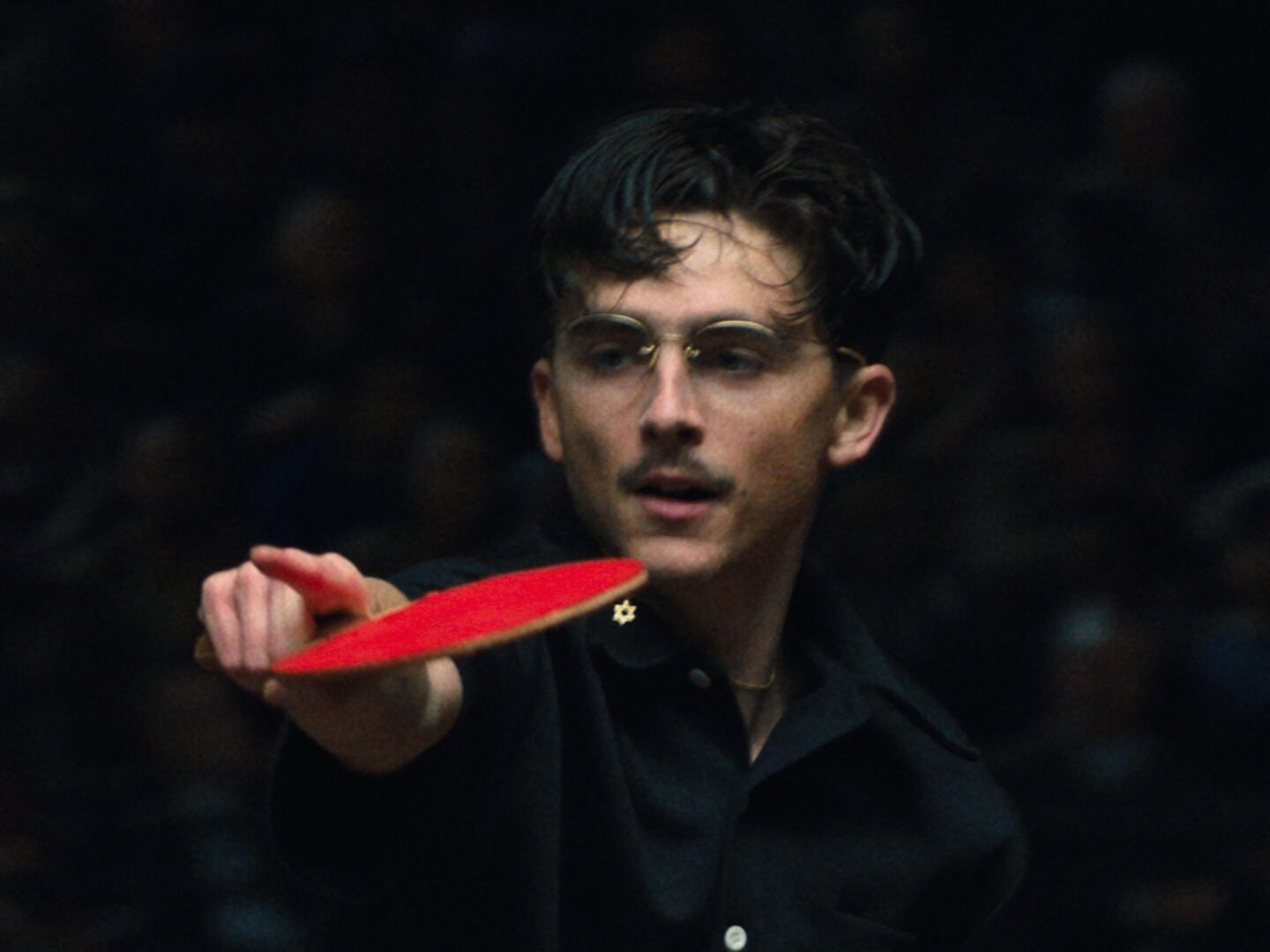
Born-and-bred New Yorker Marty Mauser (Chalamet) brags that he could sell shoes to an amputee, and the early evidence on display corroborates that claim. His real skill, however, is table tennis, an up-and-coming sport in 1952 that Marty—a slender young Lower East Side denizen with small spectacles and a neat, thin mustache—thinks is on the cusp of a domestic breakthrough.
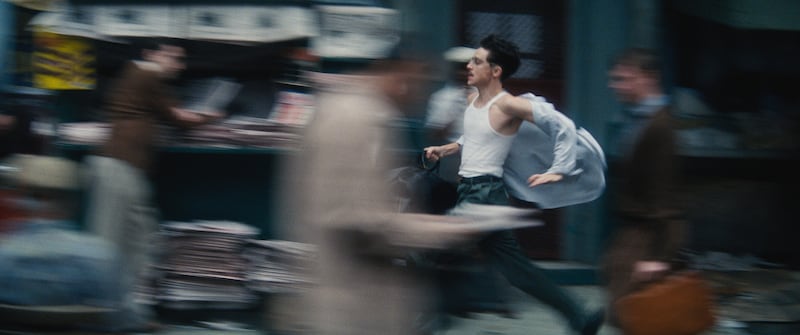
Marty himself is on the brink of becoming the U.S.’s premier player. Thus, he’s desperate to receive a monetary advance from his uncle (who’s his boss) for plane fare to London for the British Table Tennis Open. Unfortunately, Marty’s relative doesn’t trust him, and with good reason, since he’s the sort of shady huckster who sneaks into the back room for a quick screw with married paramour Rachel (Odessa A’zion) and, when he’s denied the funds, robs the shoe store and flees the country.

Marty’s life (loosely based on table tennis luminary Marty Reisman) is a series of scams and skirmishes, and his mother’s (Fran Drescher) attempt to lure him home by faking an illness indicates that shiftiness runs in the family. Safdie’s adrenalized film hits the ground running in the Big Apple and picks up its pace once it arrives across the pond, where Marty solidifies himself as a formidable table tennis pro, as well as an individual in constant competition with himself (and the world) to demonstrate that he can have, and get away with, whatever he desires.
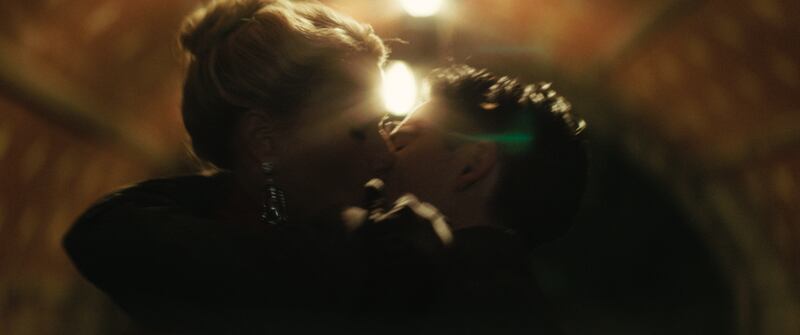
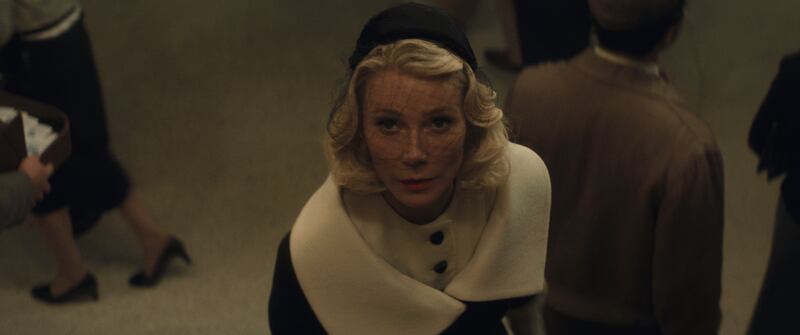
In this case, that turns out to be famous ’30s actress Kay Stone (Gwyneth Paltrow), whom he woos by dialing her hotel room and brashly inviting her over—a preternaturally cocky gambit which he pulls off. That Kay is the wife of pen magnate Milton Rockwell (Shark Tank’s Kevin O’Leary) merely ups the challenge for Marty, who, in the aftermath of their tryst, tries to pay for Milton’s restaurant meal and then strike up a business partnership.
Though Marty is certain that victory is inevitable, his failure in the tournament finale against Japanese rival Koto Endo (real-life table tennis champ Koto Kawaguchi) is marred by an unsportsmanlike tantrum that underscores his immaturity. Not that he gleans anything from this flameout; on the contrary, it’s just more fuel for his fire, and Marty Supreme never slows as it charts his protagonist’s ensuing stabs at proving his naysayers wrong by earning enough money to travel to Tokyo for the next tournament.
Marty views this as an opportunity to repair his reputation. Nonetheless, Chalamet’s abrasively determined performance makes plain that he has no worthy standing to redeem. Exuding an arrogance to match his gifts (with a paddle and his mouth), and a single-mindedness that’s devoid of morality or self-awareness, Marty is an unrepentant striver, and the actor delivers a feverish go-for-broke tour de force.

Working with illustrious cinematographer Darius Khondji, Safdie gives Marty Supreme a shadowy 35mm sheen that’s at once rich and cold, and he embellishes his helter-skelter action with harried handheld camerawork and long ’70s-style zooms that locate Marty in distant crowds. In its grim, grimy melancholy, the film most evocatively recalls Bob Rafelson’s The King of Marvin Gardens, except that its momentum is pure Good Time, all hyperactive ambition and anxiety.
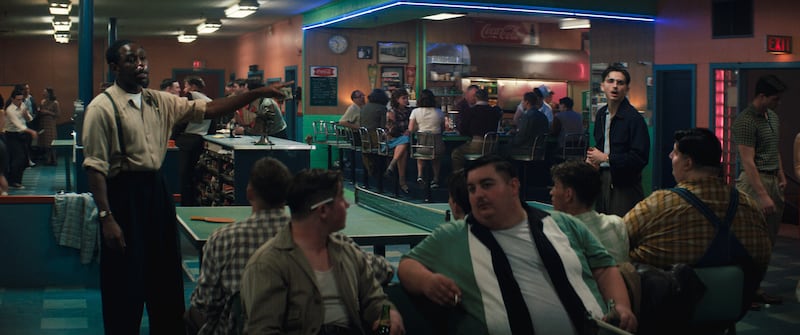
Chalamet moves around the frame with ferocious purposefulness, and that pedal-to-the-metal hastiness is equaled by the story. Whiplashing around corners like a runaway train threatening to go off the rails, it vacillates between various points of interest, including Marty’s buddy Dion (Luke Manley), who’s helping him create orange ping pong balls; his husting compatriot Wally (Tyler the Creator), who joins him in swindling a group of bowling alley marks; and gangster Ezra (legendary NYC auteur Abel Ferrara, whose work is a clear inspiration for this venture), whose dog is cared for, sort of, by Marty following a one-of-a-kind bathtub calamity.

The parallels between Marty Supreme and Uncut Gems are so numerous (complete with cameos from NBA stars such as George “The Iceman” Gervin) that the former quickly comes to feel like the Casino to Safdie’s prior Goodfellas. The director’s familiarity with his New York milieu and its colorful inhabitants (embodied by the likes of Sandra Bernhard, David Mamet, and Isaac Mizrahi) gives the material its vibrant authenticity.
It’s the film’s lead performances, though, that provide it with its hard edge. O’Leary doesn’t have to stretch much to play the monumentally prickish Milton. At the same time, Paltrow is alternately tough and needy as on-the-comeback Kay, and A’zion is wounded and cagey as the distressed Rachel, whose pregnancy turns out to be another major obstacle in the table tennis maestro’s path to the top. In their own ways, they’re almost as wild as Chalamet, and they complement his go-for-broke crookedness with like-minded treacherousness.
Scored to 1950s pop hits, ’80s New Wave, and Daniel Lopatin’s soaring orchestral compositions, Marty Supreme has more than a bit of Scorsese-ian flair, and its ping pong matches (performed, impressively, by Chalamet) boast a dynamism that’s in keeping with the proceedings’ fierce, flailing swagger.
The Sword of Damocles seems to perpetually hang above Marty’s head, poised to strike at the slightest slip-up. Yet with rousing agility, Safdie and frequent collaborator Ronald Bronstein’s script keeps him from ever fatally tripping, always affording him, at moments of failure, far-fetched chances for salvation. The result is a 150-minute-long heart attack of a film in which its protagonist, repeatedly and dangerously, crashes out and is narrowly revived.

Culminating with Marty’s trip to Japan, which he makes only after suffering a string of indignities and near-death experiences, the director’s tale is ultimately shrouded in an air of doom. Marty, however, remains a fanatically confident huckster whose will is as great as his recklessness, and Safdie refuses, to the end, to bestow him with easy triumph or tragedy. Instead, opening with conception and closing with birth, his latest proves a delirious—and subtly skeptical—portrait of a child becoming a man, and a loser learning how to win.