CBS News’ 60 Minutes has dug into the escalating economic toll of President Donald Trump’s war with Iran.
The network on Sunday spotlighted the Iranian blockade of the Strait of Hormuz, which has sent global oil prices soaring and already hit Americans in their pocketbooks.
Trump and his advisers appear to have badly miscalculated how Iran would respond to U.S. strikes. Global energy expert Bob McNally told 60 Minutes correspondent Cecilia Vega that Iran’s ability to turn the strait into “the mother of all choke points” was long known.
“We’re not surprised at all,” McNally, a former energy adviser to President George W. Bush, said of Iran’s rapid disruption to the global oil flow.
He said he had “concerns” that the Trump administration had not prepared for the wide-reaching implications of its war.
“We could be looking at the highest gas prices ever paid in this country?” Vega asked.
“If we don’t open Hormuz to the free flow of traffic, yes,” McNally replied.
60 Minutes noted that gas prices have jumped more than 65 cents per gallon since the war began—“the fastest weekly spike in 10 years”—a surge expected to squeeze Americans not just at the pump but also through higher grocery prices and plane tickets as the higher oil cost trickles down.
The war has also cost American heroes their lives, with the crash of a U.S. refueling aircraft in Iraq on Thursday raising the total number of American service members killed to at least 13.
Roughly a fifth of the world’s oil typically passes through the Strait of Hormuz. But according to 60 Minutes, 400 oil tankers holding 200 million barrels of oil are currently stranded in the Persian Gulf, after Iran launched at least 16 attacks on ships in and around the narrow strait.
Trump, 79, incredulously claimed Wednesday that “the straits are in great shape.”
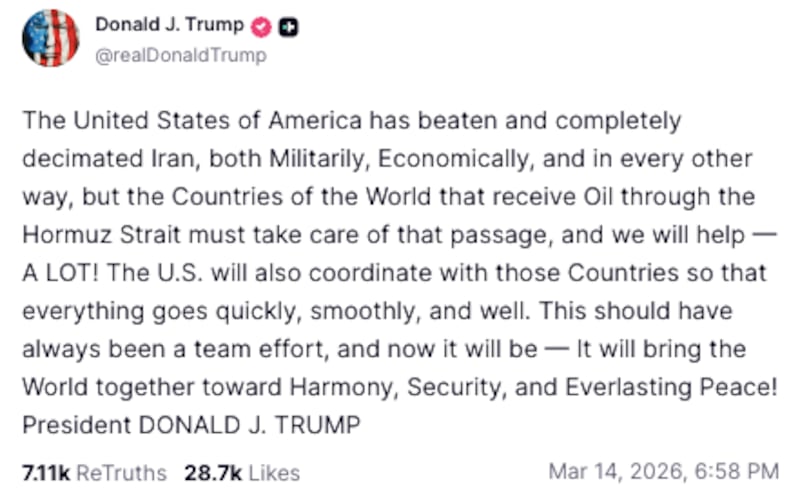
But on Saturday, the self-proclaimed “peace president” chastised other countries for not helping “take care” of the passage, while at the same time declaring that the U.S. had “beaten and completely decimated Iran.”
“This should have always been a team effort, and now it will be,” he wrote on Truth Social. The U.S. has taken multiple measures aimed at lowering oil prices, among them lifting sanctions on Russian oil.
However, McNally told Vega that “There are no policy solutions to a prolonged closure of the Strait of Hormuz.”
“Even if the White House, President Trump, declared an end of this war today tomorrow, is there any guarantee that Iran would open up the strait and it’s back to business as usual?” Vega asked.
“No guarantee,” McNally said. “It’s not like there’s a big gate that swings open in front of the Hormuz and Iran locks the gate.”
And while Trump has said the U.S. would help cover the cost of risk insurance to encourage ships to move through the strait, Captain Silke Lehmköster, who oversees vessels for the German shipping giant Hapag-Lloyd, said simply: “You cannot insure the life of a seafarer.”
Lehmköster said U.S. Navy escorts would be the better option, which Trump has proposed but not yet made available.
The Daily Beast has reached out to the White House for comment.

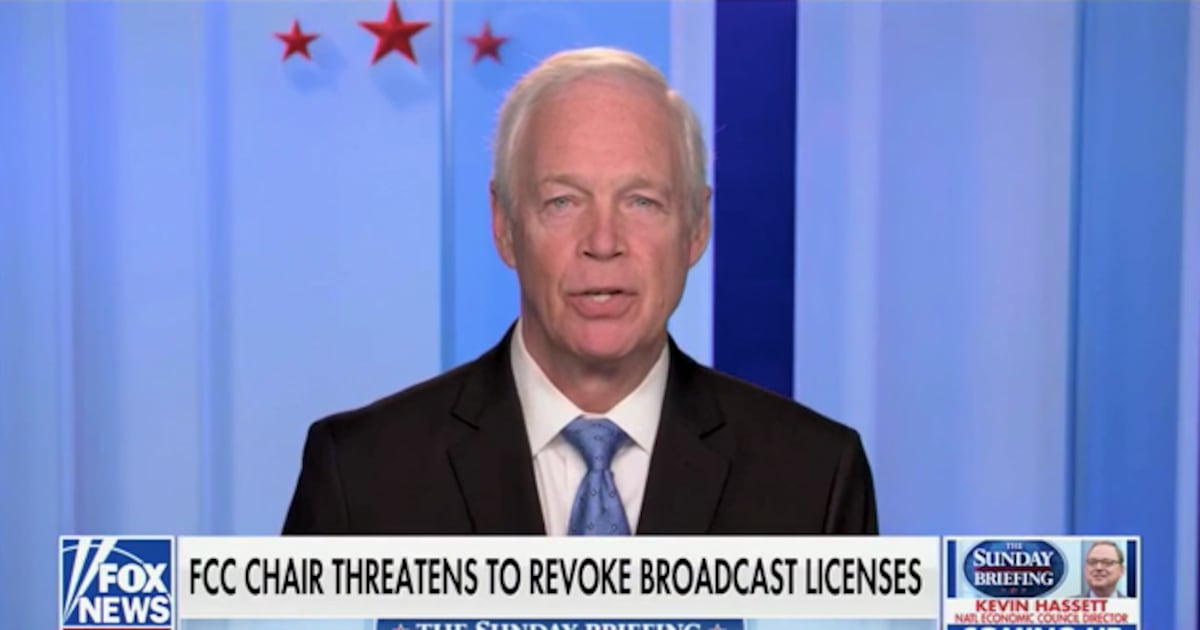
60 Minutes’ report comes after Trump-friendly Federal Communications Chairman Brendan Carr threatened to revoke networks’ broadcast licenses if they do not cover the president’s war in a way that satisfies what he called “public interest.”
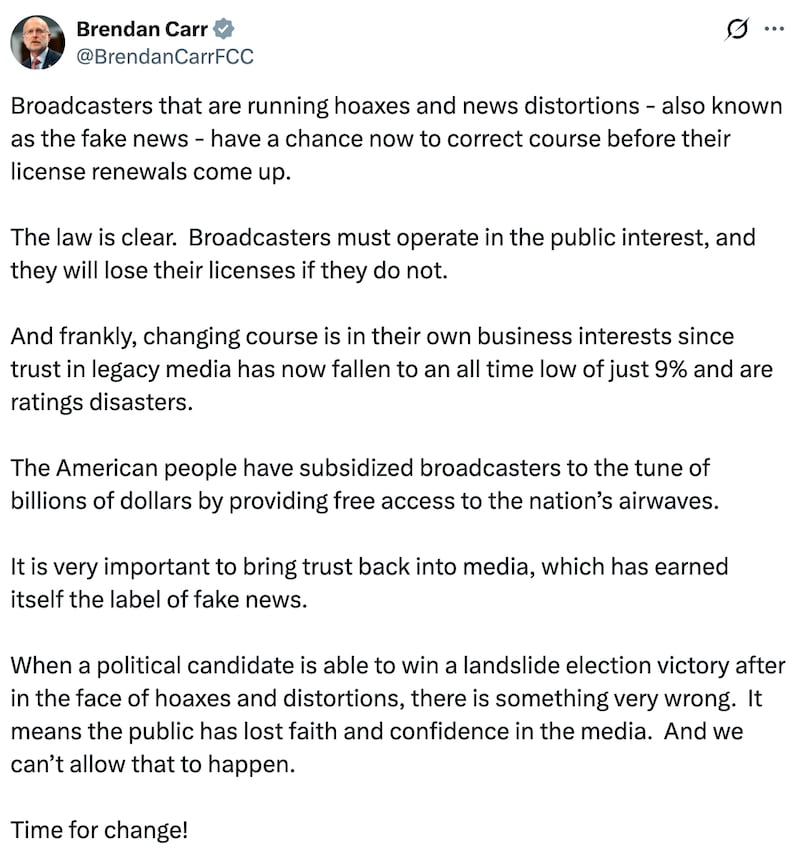
“Broadcasters that are running hoaxes and news distortions - also known as the fake news - have a chance now to correct course before their license renewals come up,” Carr, 47, wrote on X.
CBS News has been accused of making a MAGA-friendly pivot since new owner David Ellison—son of Republican megadonor Larry Ellison—installed anti-woke columnist Bari Weiss as editor in chief.

Weiss, 41, sparked a mutiny among CBS staffers in December after she abruptly shelved a 60 Minutes segment that delved into the Trump administration’s deportation of Venezuelan nationals to El Salvador’s CECOT megaprison.
She justified pulling the segment by citing the need for more reporting and interviews with members of the Trump administration. Sunday’s segment on the president’s war with Iran did not feature such interviews.