President Donald Trump admitted in a letter to Congress that he has no idea how his war with Iran will play out.
The 79-year-old president has repeatedly contradicted himself about why he launched “major combat operations” against Iran, and provided conflicting timelines about how long he expects the bombing to continue.

His answers have ranged from a few days to more than a month, which Pentagon insiders warn would put serious strain on U.S. air defense stockpiles. Already six American service members have been killed in retaliatory strikes since the joint U.S.-Israeli campaign began on Saturday.
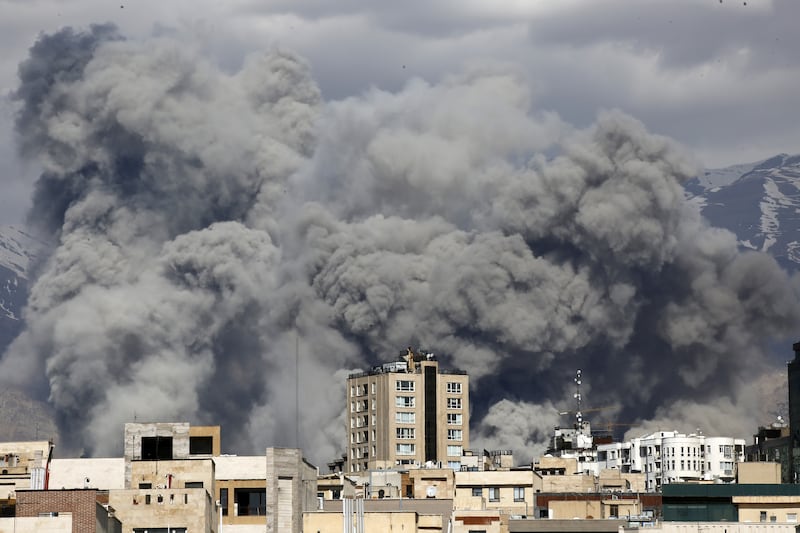
On Monday, the president’s lack of a plan in Iran was outlined in stark terms in a letter to Congress obtained by CBS News officially informing lawmakers of the strikes.
“Although the United States desires a quick and enduring peace, it is not possible at this time to know the full scope and duration of military operations that may be necessary,” Trump said in the letter.
U.S. forces “remain postured to take further action… to address further threats and attacks upon the United States or its allies and partners,” he continued.
The letter was sent under the War Powers Act, a 1973 resolution requiring the president to notify Congress within 48 hours of deploying U.S. forces if Congress has not declared war. The deployment cannot last more than 60 days without congressional approval.
The clock is now ticking for Trump to either conclude the military operation or convince Congress to back the war with Iran.
“These strikes were undertaken to protect United States forces in the region, protect the United States homeland, advance vital United States national interests, including ensuring the free flow of maritime commerce through the Strait of Hormuz, and in collective self-defense of our regional allies, including Israel,” Trump said in his letter.
Over the weekend, the president gave four different explanations in two days about how long he plans to bomb Iran and what he envisions for the country’s future, leading to accusations that he’s making up the deadly military campaign as he goes along.
The administration has also given shifting explanations about why Trump started the war in the first place.
The White House on Saturday claimed that after weeks of deliberations, Trump finally decided to launch a full-scale attack against Iran because the U.S. had received indications that the country was planning to launch missile attacks against U.S. bases.
But during a briefing with congressional staffers, Pentagon officials said there was no evidence that Iran had been planning preemptive strikes.
During a video announcing the strikes, Trump also claimed Iran was building missiles that “could soon reach the American homeland.”

U.S. intelligence assessments, however, contradicted that claim, finding that Iran was years away from developing intercontinental ballistic missiles and wasn’t interested in doing so.
After the U.S. military’s Central Command announced that three soldiers had been killed at a base in Kuwait and five seriously wounded, Democratic lawmakers blasted the president for putting service members in harm’s way without laying out a plan for victory in the region.