

Rob Reiner was many things, including a celebrated actor (and two-time Emmy winner for All in the Family) and a fiercely outspoken political activist. Yet perhaps more than anything, the 78-year-old artist, who was murdered on Sunday along with his wife Michele Springer, was a beloved and distinguished director—and one whose early hot streak in the ’80s and ’90s is, in terms of acclaim, popularity, and influence, virtually unmatched in the history of American movies.
Reiner immediately made a behind-the-camera splash with This Is Spinal Tap, one of the all-time great debuts not only because of its laugh-out-loud funniness, but because it pioneered the mockumentary form.
A satiric portrait of a fictional heavy metal band (played by Christopher Guest, Michael McKean, and Harry Shearer) that’s purportedly helmed by Reiner’s documentarian Martin “Marty” Di Bergi, the 1984 film was a riff-heavy blast of absurdity that established Reiner’s distinctively witty voice. Ridiculous and sneakily empathetic, it’s an enduring classic for innumerable reasons, not least of which is that—with its amplifier-dial-to-11 scene—it boasts a big-screen comedy gag without equal.
For his sophomore effort, Reiner stuck to humor, albeit in a more romantic vein, with The Sure Thing, an undervalued Capra-esque affair starring John Cusack and Daphne Zuniga as at-odds college students on parallel cross-country journeys to meet significant others. Assuredly conventional and buoyed by an excellent Cusack turn, it was a modest hit at the time of its 1985 release, but it remains an undervalued old-school charmer, thanks in no small part to the sincere and poignant heart the director brings to the project.

If, with his maiden two productions, Reiner cemented himself as a director comfortable being both sweet and silly (often at the same time), he demonstrated that he was more than simply a jokester with Stand by Me, the first of his two widely praised 1980s Stephen King adaptations.
Segueing to drama via the coming-of-age story of four friends (Wil Wheaton, River Phoenix, Corey Feldman, and Jerry O’Connell) who discover a dead body in their 1959 Castle Rock hometown and must cope with the fallout, it was, for Reiner, a step in a more overtly serious direction. Yet what shone most brightly was his gift for working with actors and, also, for infusing darker material with sharp, clever hilarity—a lifelong characteristic that would define his future successes.

Stand by Me was a memorable touchstone for ’80s kids. The Princess Bride, however, was a veritable landmark in young-adult cinema. It’s a swashbuckling comic fantasy that takes a familiar damsel-in-distress narrative and transforms it into a rollicking odyssey filled with loveably cartoony archetypes, from dashing heroes (Cary Elwes), fair maidens (Robin Wright), and tormented swordmen (Mandy Patinken), to dastardly villains (Chris Sarandon), shady criminals (Wallace Shawn), and friendly giants (Andre the Giant).
A triumph of entertaining showmanship, it’s the crowning achievement of Reiner’s career, an endlessly rewatchable gem overflowing with inspired gags and fairy tale amour. And, among other things, it set the stage for the director’s subsequent venture, which would, in turn, set the standard for its chosen field.
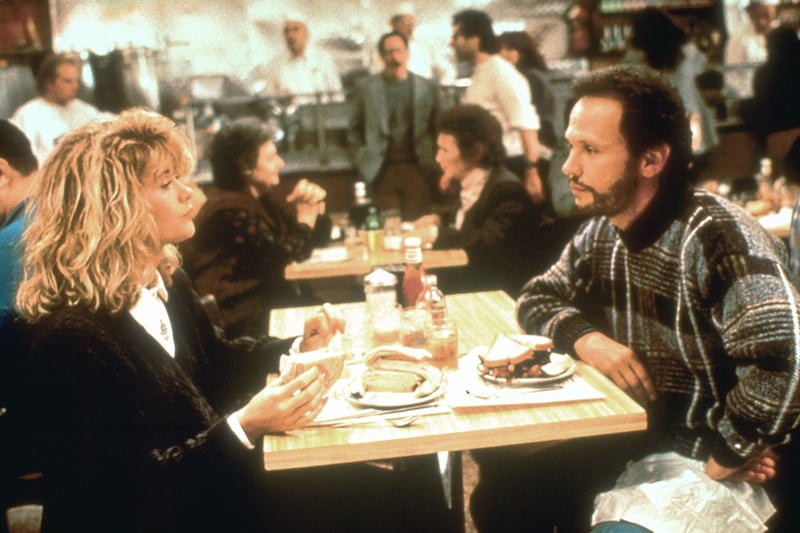
In 1989, Ephron wrote When Harry Met Sally, which starred Billy Crystal and Meg Ryan, was directed by Rob Reiner, and became a huge box-office hit.
Everett CollectionThat film was When Harry Met Sally…, Reiner’s critical and commercial 1989 smash about the relationship between Meg Ryan and Billy Crystal’s will-they-or-won’t-they friends. The modern romantic comedy against which all others are judged, the director’s fifth feature was his second consecutive benchmark work, so fully perfecting its genre’s devices that, 36 years later, it continues to be as adored as it was upon its debut.
Solidifying Meg Ryan as a rom-com queen, and containing yet another iconic cinematic moment—the I’ll-have-what-she’s-having diner scene—it’s as good as feel-good movies get, and further proof of its maker’s indelible skill at marrying the heartfelt and the hysterical.

Had Reiner chosen, at this point, to hang things up, he would have been known as a true comedy master. Instead, he proved himself an assured dramatist in the early ’90s, beginning with 1990’s Misery.
His second go-round with Stephen King, this tale of a popular romance novelist (James Caan) who’s held captive by his “number one fan” (Kathy Bates) earned a Best Actress Oscar for its leading lady, whose performance as the obsessive Annie Wilkes sits in the pantheon of unforgettable female villains. It’s Reiner’s deft stewardship, however, that makes his thriller pulse with deranged suspense, and demonstrated, once more, his knack for infusing even the scariest of situations with doses of unexpected humor.
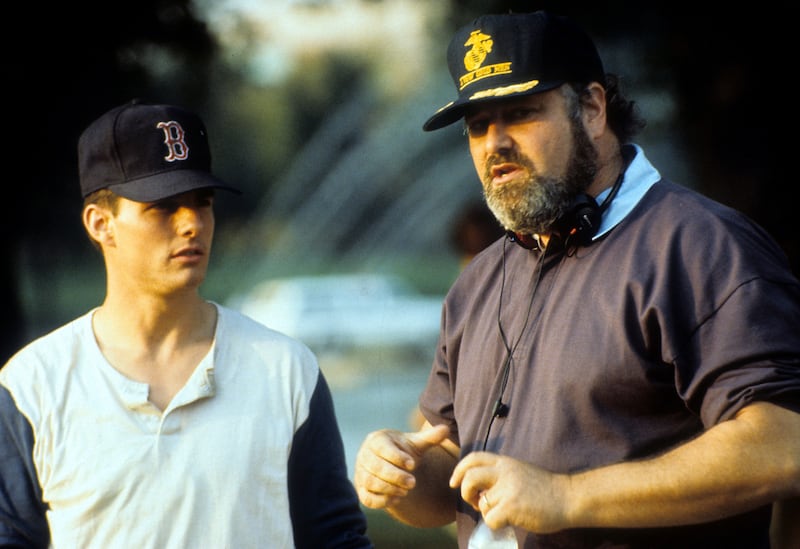
Unwilling to rest on his laurels, Reiner concluded his legendary opening-career period with 1992’s A Few Good Men, which set absurdity aside in favor of legal thrills and, as was the director’s trademark, delivered a showstopping scene for the ages in the courtroom back-and-forth between Tom Cruise and Jack Nicholson that culminates with the latter’s pronouncement, “You can’t handle the truth!”
With Demi Moore rounding out the film’s headlining trio, and bolstered by supporting work from Kevin Bacon, Kevin Pollak, J. T. Walsh, Cuba Gooding Jr., and Kiefer Sutherland, it’s one of the decade’s most rewatchable dramas, and additional evidence of both Reiner’s multifaceted talent and growing interest in melding his love of genre with his political beliefs.
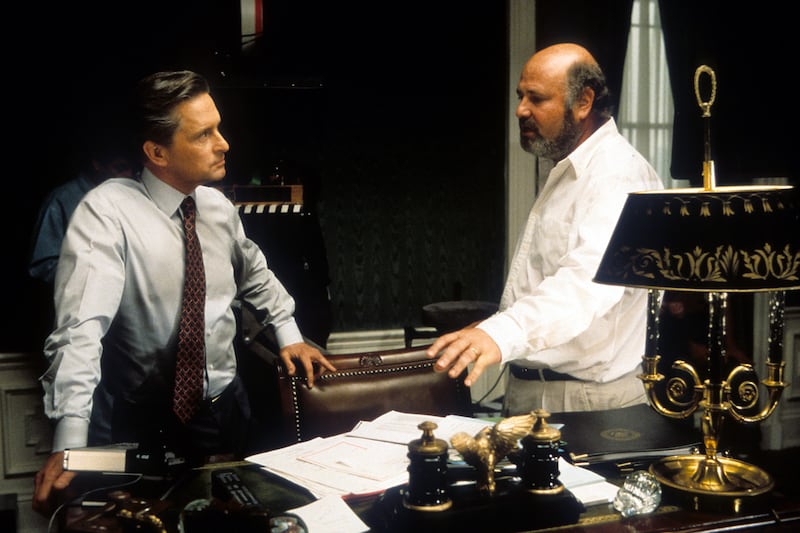
Having blazed such an unparalleled trail, it was inevitable that Reiner would eventually stumble, and stumble he did with 1994’s North. And though he’d regain his footing with 1995’s charming The American President and, in 2007, leave one final indelible cultural mark with The Bucket List (a Jack Nicholson-Morgan Freeman team-up that originated the title concept), he’d never again hit the highs of his breakthrough run.
Even so, that stretch is so titanic, it barely matters that his later output was a shadow of its predecessors. At his peak, he was America’s great populist filmmaker, and like very few of his peers, he can lay claim to the most illustrious of accomplishments: he defined an era.