
Everyone wants their very own Yellowstone. For Netflix, The Abandons will not be it.
A cross between Taylor Sheridan’s Western hits (most notably, 1883) and HBO’s classic frontier drama Deadwood, Sons of Anarchy creator Kurt Sutter’s series is a pretender through and through, piling on clichés without any sense of authenticity, rhythm, or originality.
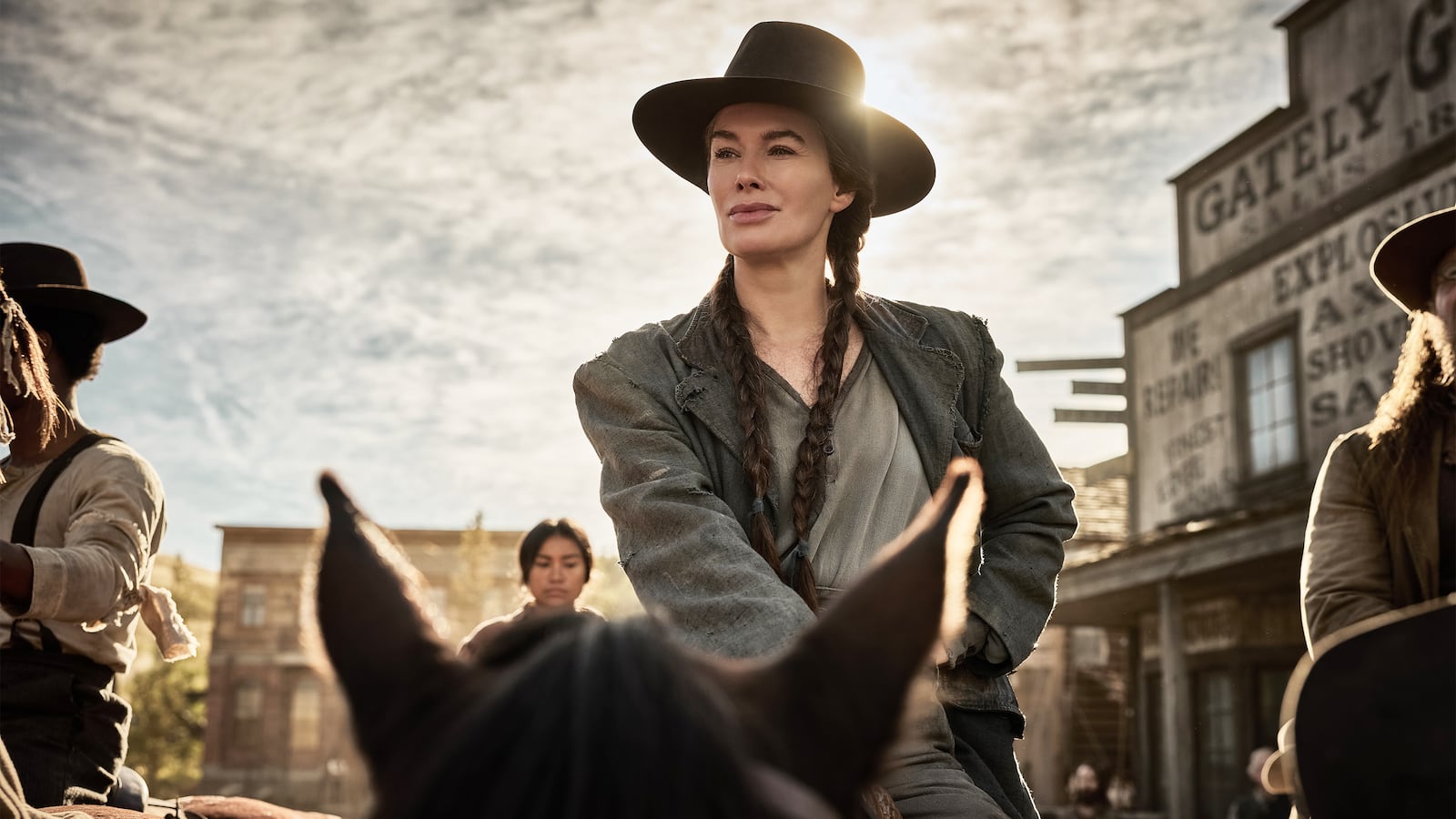
A compendium of evocative fiddle music, beautiful landscape panoramas, and fighting, shooting, riding, cursing, and scheming, this 19th-century saga, premiering Dec. 4 on Netflix, is a clunker that, with its every plot twist and cornball title card, flirts with parody. No matter the voracious scenery-chewing of Gillian Anderson and Lena Headey, its manifest destiny is bleak.
(Warning: Some spoilers follow.)
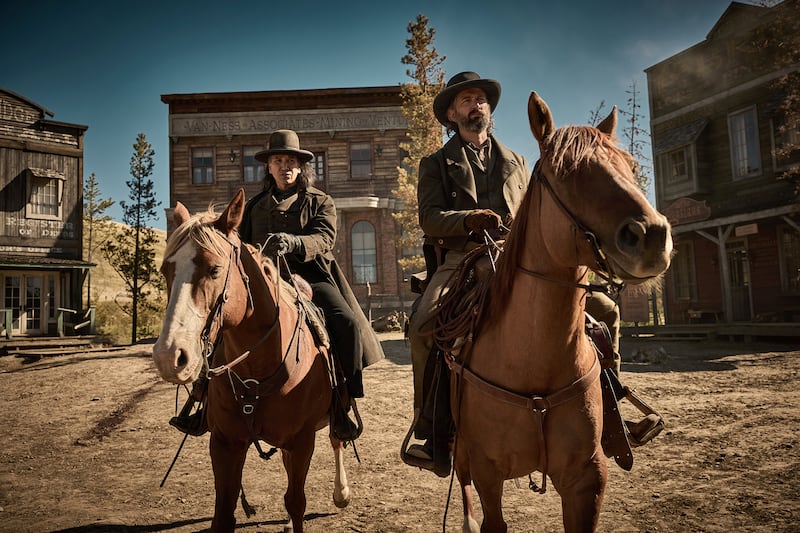
In the Washington Territory circa 1854, industrialist Constance Van Ness (Anderson) lords over the Angel’s Ridge community she built like an imperious grand dame, her face frozen in an expression of haughty disdain. Constance rules with her subservient children Garret (Lucas Till), Trish (Aisling Franciosi), and Willem (Toby Hemingway), the last of whom is angry that his mom favors his younger brother. To cope, he gets drunk and rapes Dahlia Teller (Diana Silvers).
For that monstrous infraction, he’s killed by Fiona Nolan (Headey), whose ranch, The Abandons, is part of the silver-rich Jasper Hollow land that Constance wants to acquire in order to prop up her flailing financial fortunes before her Vanderbilt benefactor pulls out of the area, dooming them all.

Fiona was the Irish nanny to the Teller patriarch, and when he died, she adopted his kids Dahlia and Elias (Nick Robinson) as well as took in Albert Mason (Lamar Johnson) and Lilla Belle (Natalia del Riego). Now, she runs the Abandons with spitting, swearing ferocity, her love of God second only to her fury at Constance—and with good reason, since at the start of The Abandons, the businesswoman orders rustlers to set fires that kill Fiona’s cattle.
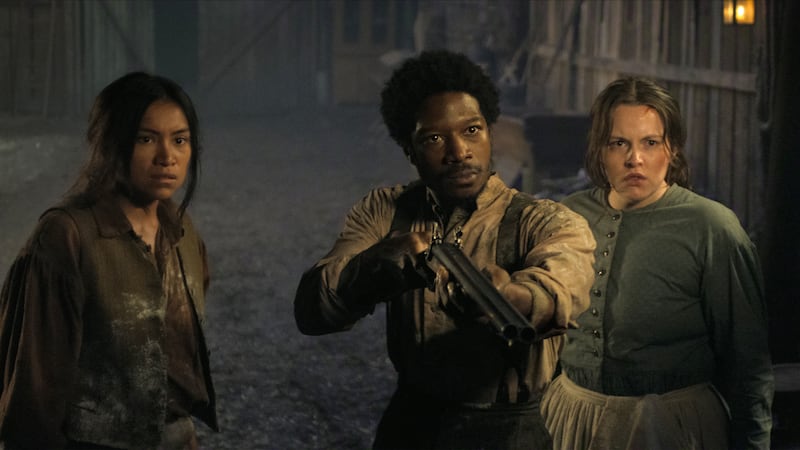
Thus, Fiona is none too sad about subsequently offing Constance’s boy, although this murder poses considerable problems for her and the rest of Jasper Hollow’s residents, who include reclusive Walter Paxton (Brian F. O’Byrne), mysterious Miles (Ryan Hurst) and his daughter Samara (Katelyn Wells), and Native American Quentin (Clayton Cardenas) and his wife (Elle-Máijá Tailfeathers). To cover up this offense, they bury Willem in the grave of Walter’s dog and attempt to get on with their lives.
That, of course, is impossible, and it’s clear from the get-go that it’s only a matter of time before their crime will be (literally and figuratively) unearthed. Before that happens, The Abandons complicates matters via a host of storylines that have been seen many times prior, and in far livelier forms.
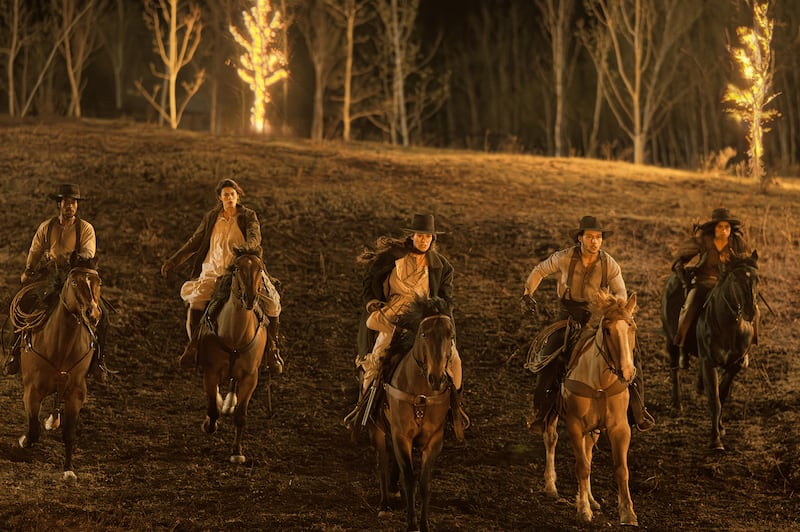
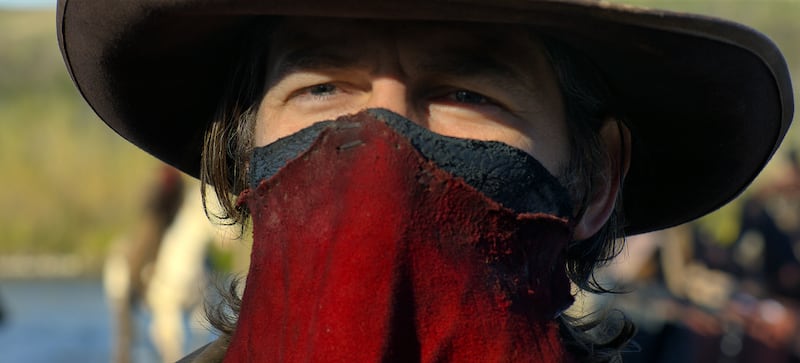
To find her missing boy, Constance partners with Xavier Roache (Michiel Huisman), whose missing finger soon tips others off to his identify as the leader of the bandit Redmasks gang, and when he’s not searching for Willem, he’s carrying out Constance’s orders to muck up a potential treaty between the U.S. cavalry and the Cayuse tribe that’s also opposed by a band of Cayuse rebels.

This subplot is threadbare even by the series’ shabby standards. As with so much of the action, it plays out in underdeveloped, herky-jerky fashion—not to mention winds up being a largely unimportant distraction from the main conflicts at hand.
Because it’s been envisioned as a long-form soap opera, The Abandons provides some of its characters with budding romances. Out of the blue, Constance hires Albert as Angel’s Ridge’s new schoolteacher, which rankles at least one of the students’ parents (because he’s Black, and they’re racist) and impresses Lucinda Burrell (Natasha Mumba), who’s recently arrived from Trinidad.
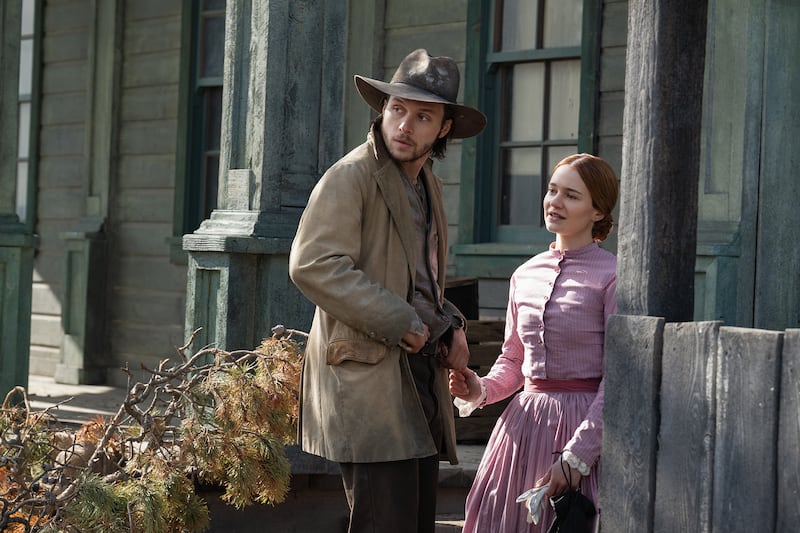
Of greater concern for Sutter’s series is the growing bond between Elias and Trish, whose feelings for each other are fated to lead to trouble for their at-war clans. This sub-Romeo and Juliet narrative strand is perfunctory and tiresome, albeit no more so than the rest of the proceedings, and when it’s not twisting its characters up in standard-issue knots, it’s staging nocturnal skirmishes that are primarily notable for their visual incoherence.
Constance bemoans motherhood as a “thankless endeavor,” yet The Abandons is too sketchy to cast either its heroic or villainous mom as anything other than a tired archetype. In virtually every scene, Headey simply sneers and fumes as the self-righteous Fiona, whose efforts to hold the Hollow together beget merely additional headaches.
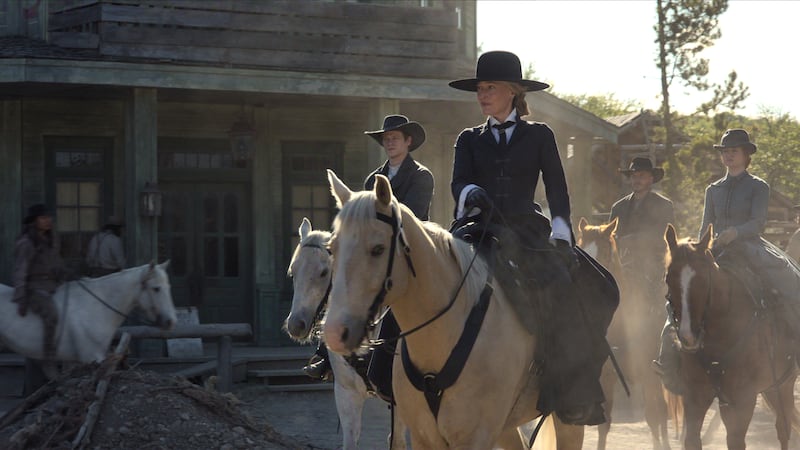
Similarly one-note is Anderson’s Constance, a second-rate Al Swearengen who rules from her main street office’s balcony and never shies away from brutality. This causes some strains with her minions—including would-be successor Garret and her Native American right-hand man Jack (Michael Greyeyes)—but it’s all just window dressing for a decidedly straightforward affair whose dynamics are rote and wearisome.
From Fiona’s faith to a run-in with a grizzly bear that leads to the death of a blink-and-you’ll-miss-him cameoing star, The Abandons is shallow and silly, full of contrived twists and hoary pronouncements. Though Sutter embellishes it with dismemberments, firefights, and sexual violence, it fails to exhibit even the faintest flicker of real life.
Flatly directed and gracelessly written, the series doesn’t care about balance—Quintin and his spouse, for example, are barely named, much less included as meaningful members of the Hollow collective—and its narrow scope results in unbelievable developments, such as the murder of a county priest that no one bothers investigating because, well, there doesn’t seem to be a world outside this tiny enclave. It all resonates as merely play-acting on grimy, muddy sets, such that it’s astounding that there’s no scene in which someone instigates a saloon brawl after a crooked game of cards.

Yellowstone’s writing is hardly assured, but Sheridan at least knows how to push buttons; The Abandons, on the other hand, has nothing to say about anything other than that pre-Civil War America was a down-and-dirty place where the sole thing more important than family was land ownership. With many of its seven episodes running under 40 minutes, it certainly doesn’t dawdle. Yet given its wholesale imitativeness, that’s cold comfort.
Cliffhanger be damned, few will want to stick around this Western territory to find out the next hackneyed steps it intends to take.