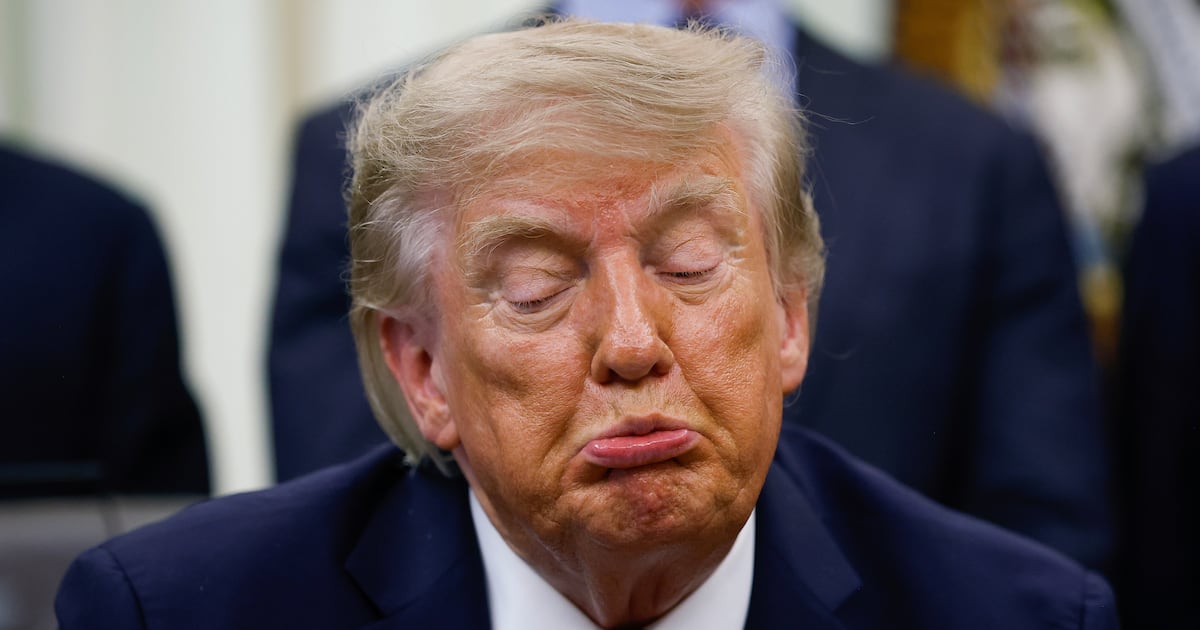

Donald Trump was forced to confront the scale of the GOP’s midterm wipeout in real time after discovering during an interview that one of his hand-picked candidates had lost.
“I’m just looking at these results as I’m talking,” Trump told the New York Times, before revealing that Republican Senator Darline Graham had lost in South Carolina. “Wow, that’s amazing.”

Democrat Annie Andrews defeated Graham in South Carolina, a longtime Republican stronghold, marking the Democrats’ first Senate win in the state in 28 years. Trump had carried South Carolina by 18 points in 2024.
Graham had been appointed to the seat in July following the sudden death of her brother, Senator Lindsey Graham, with Trump backing her appointment.

In his interview with The Times, Trump wondered aloud how the late Lindsey Graham might have fared had he run, suggesting he would most likely have won.
The exchange came as Republicans suffered widespread losses in the midterms, with the Democrats taking back control of Congress despite Trump throwing himself into the midterm campaign.
Republicans had already been facing warning signs, with polling showing Democrats gaining ground in traditionally red states including South Carolina, Texas, Kansas and Ohio.

On election night, those vulnerabilities translated into sweeping losses for the GOP.
The president headlined 30 rallies across the country to boost support for his party and repeatedly urged supporters to vote as though he were on the ballot.
But rather than accept responsibility for the results, Trump blamed his absence from the ballot for the Republican losses.
“I wasn’t on the ticket, and because I wasn’t on the ticket, we couldn’t get enough people out to vote,” he told the Times.

The tide had been turning against the GOP since the president launched his war on Iran in February.
The war has sent fuel prices soaring, despite Trump’s assurances that the spike would be temporary. Nine months into the conflict, Americans are still paying an average of $4.12 a gallon for gasoline and $6.27 for diesel, according to AAA.
Trump’s approval rating has meanwhile fallen into the low 30s, its lowest level on record.
Still, Trump dismissed suggestions that his decision to go to war with Iran had hurt Republicans, insisting he had no regrets and would make the same decision again.
He did, however, acknowledge that voters were unhappy with rising oil prices.

“They don’t mind the Iran, but they probably weren’t happy — they weren’t happy with the oil price,” he said, before declaring the military action “a very wise decision for the future of the country and the world.”
He also stood by his endorsements of candidates including Graham and Texas Attorney General Ken Paxton, who also lost his Senate bid.
And despite the setbacks, Trump insisted there was nothing about his first two years back in office that he regretted.
“I consider it to be the most successful two-year period in the history of any president,” he said.