House Speaker Mike Johnson resorted to verbal gymnastics as he was put on the spot over President Donald Trump’s extraordinary concessions in his deal with Iran.
Johnson was long a critic of President Barack Obama’s 2015 nuclear deal with Iran and applauded Trump for abandoning the deal and imposing sanctions on the country during his first term in 2018.
But the Republican leader has found himself in a bind after Trump, desperate to end his war with Iran, struck a peace deal with the country’s regime that has lifted sanctions on Iranian oil for the first time in decades and paves the way for the eventual removal of all sanctions.
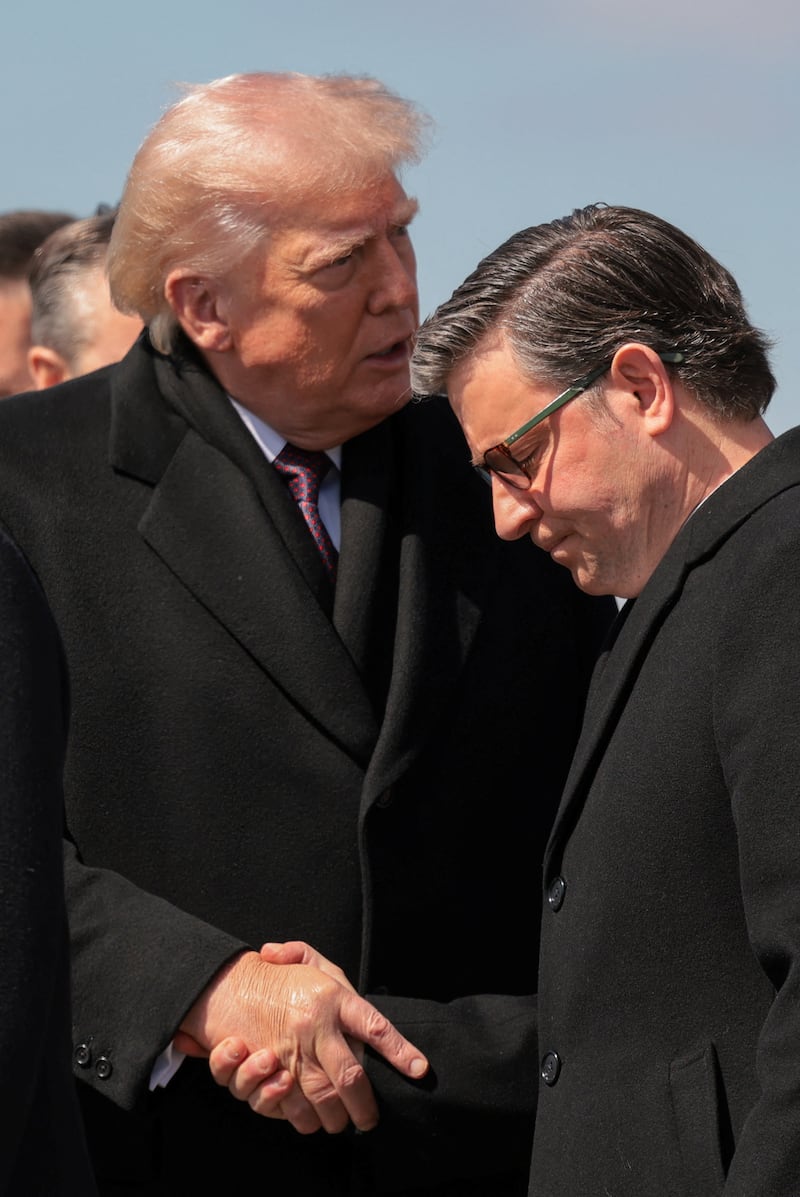
As he left his office in the Capitol on Tuesday, Johnson ran headfirst into an uncomfortable question from CNN’s Chief Congressional Correspondent Manu Raju: “You were very critical of sanction relief under the JCPOA. They’re easing oil sanctions, and other sanctions will be eased. Do you have similar concerns?”
Johnson, 54, repeatedly swerved around the question as he retreated into generalities.
“Look, there’s a lot of moving parts right now,” the Louisiana congressman said. “It is something the Trump administration is working around the clock on. I trust that they’re going to come to a lasting solution on that. The world desperately needs it, and we do as well.” Raju posted the exchange on his personal X account.

Johnson added that he was “heartened to see that gas prices are coming down for the American consumer, and the Strait is reopened,” before adding, ”The details are still being negotiated.”

Raju shot back, “What about sanctions—they’ve already announced that with oil sanctions,” as he tried again to draw out an answer.
“I have always been a supporter of strong sanctions against Iran,” Johnson said, before repeating, “There’s a lot of moving parts to this.”
“I got enough to do to manage the House over here,” he added. “I’m not going to tell the administration how to negotiate.”
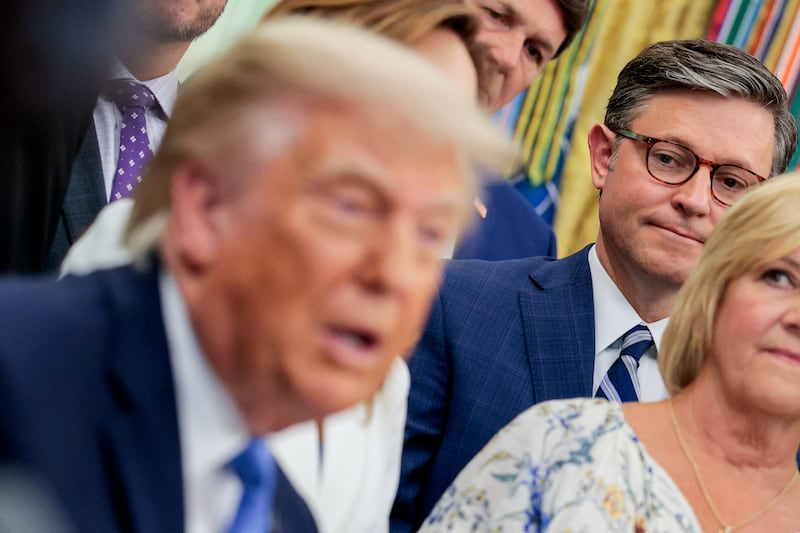
“You told the Obama administration,” Raju could be heard telling Johnson as the House speaker took a question from a different reporter.
Trump’s agreement with Iran concedes that the U.S. would terminate “all types of sanctions” against Iran, including primary and secondary ones, once a final deal is reached after the 60-day negotiation period.
In the meantime, the U.S. Treasury has already issued waivers for Iran to export crude oil and other petroleum products. The deal also says that the U.S. would work with regional partners to develop a plan for at least $300 billion for the “reconstruction and economic development” of Iran.

In 2020, Johnson co-authored a 120-page document as chairman of a Republican task force that blasted Obama’s 2015 Iran deal and declared that sanctions should not be lifted “without approval from the House and Senate” and recommended further sanctions on the country.
Meanwhile, although Iran has temporarily lifted its blockade of the Strait of Hormuz, the deal states that Iran would engage in talks with Oman to decide how the Strait will be managed in the future, falling well short of a firm pledge not to interfere with the vital waterway, which had been open and uncontested before Trump launched his war in February.