Iranian strikes have caused greater damage to U.S. military assets in the Middle East than the Trump administration is willing to admit.
Analysis by the BBC, published Monday, reveals that attacks by the Islamic Republic have cost billions of dollars in damage to at least 20, and possibly as many as 28, American military sites across eight countries in the region since Donald Trump launched his war on Iran at the end of February.
Trump has repeatedly claimed that U.S. forces have “destroyed,” “obliterated,” and “shattered” the regime’s military capabilities. The Pentagon has meanwhile tried to limit assessments of the impact on U.S. assets by pressuring Planet, a major satellite-imaging provider, to restrict public access to new images of the region.
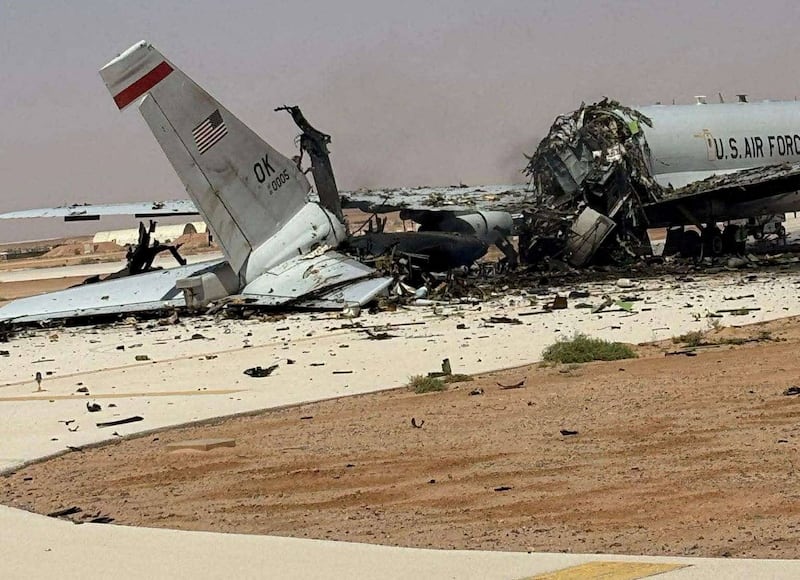
The BBC says it was still able to carry out its analysis by using “satellite imagery from other international providers combined with older images from Planet to track the damage caused by Iranian attacks.” Pentagon officials declined to respond to the findings, for “operational security reasons.”
The broadcaster lists “three state-of-the-art anti-ballistic missile batteries systems” in Jordan and the UAE among the U.S. assets that Iran has targeted over the past several months.
“The U.S. is only known to operate eight of the Terminal High Altitude Area Defense (THAAD) batteries, which are deployed at bases around the globe and cost around $1bn to manufacture,” the BBC writes. “Each battery needs a crew of about 100 troops to operate it while the interceptors it fires cost around $12.7 operationaln per round.”
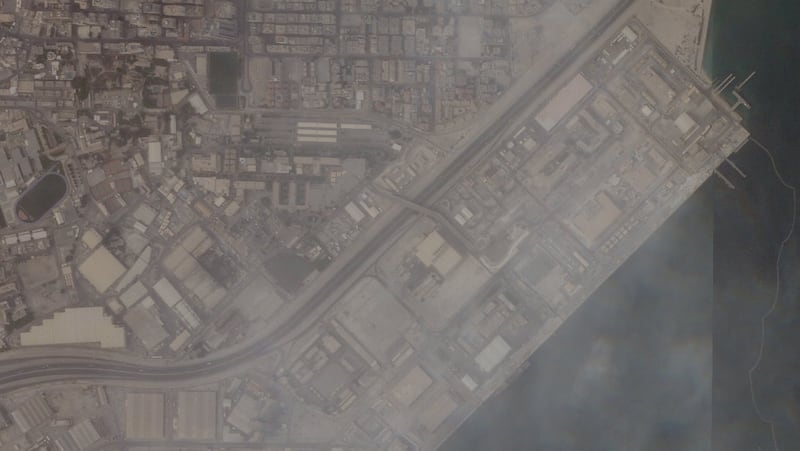
Iranian strikes have also “heavily” damaged “refueling and surveillance aircraft” in Saudi Arabia, as well as “fuel storage bunkers, aircraft hangars and troop accommodation” in Kuwait.
The BBC notes that the Pentagon has, at latest count, put the cost of Operation Epic Fury, as Trump has dubbed his war with Iran, at $29 billion. Democratic lawmakers have slammed those figures as an underestimate.
Trump declared the conflict “over” in early May. A ceasefire, brokered by Pakistan, technically still holds, but has come under mounting strain as talks between Washington and Iran have failed to yield terms for a lasting peace.
Iran has also yet to reopen the Strait of Hormuz, a vital waterway in the Persian Gulf that transports a fifth of global oil supply each year. Its closure since February has sent gas prices skyrocketing, with the national average price per gallon in the U.S. hitting $4.33 last month.
The Pentagon said on Monday it had carried out “self-defense strikes” on Iranian targets in the south of the country over the weekend in response to the downing of a high-powered drone over international waters. Iran said it had in turn targeted the air base from which those strikes had originated, without naming it.
The latest flare-up has again drawn in Kuwait, where on Saturday, Iranian ballistic missiles targeted the U.S.-operated Ali Al Salem Air Base. Air defenses intercepted the strike, but five people, including U.S. service members and civilian contractors, were wounded by falling debris.
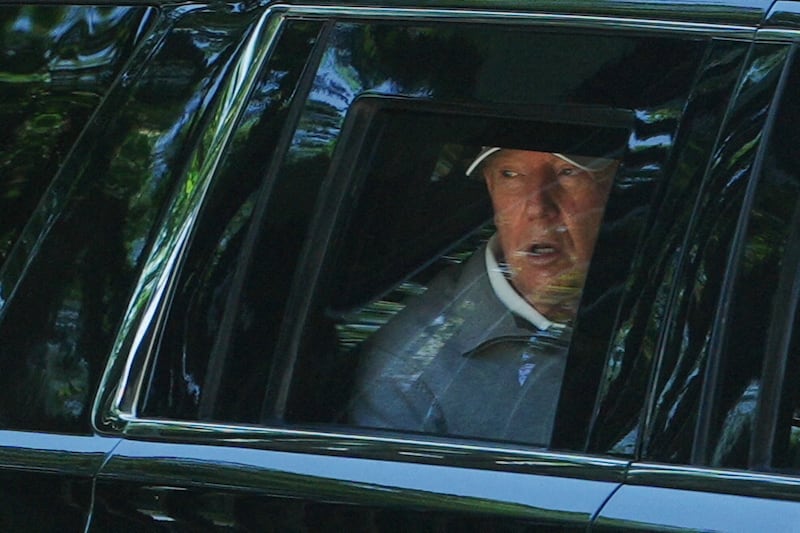
Trump, as reports of those injuries began to emerge, was spotted heading out to the Trump National Golf Club in Sterling, Virginia. He has not yet publicly commented on the attack.
The president did however send out a virulent Truth Social post later that evening, lambasting CNN over its coverage of his peace negotiations with Iran.
“Fake News CNN said today, routinely, that my Iran Nuclear Deal doesn’t talk about Nuclear, when actually it states, very clearly, that Iran will not have a Nuclear Weapon,” he wrote.
He then confusingly added of the network’s segment, which was specifically about the nuclear aspects of any prospective deal: “It then goes on, in strong and lengthy detail, to discuss various other aspects of Nuclear. In fact, that’s what most of the agreement is about.”
Trump put out a follow-up post around 1 a.m. on Monday, complaining that negative coverage of the negotiations is somehow making it harder for him to reach an agreement with Iran.
“Iran really wants to make a deal, and it will be a good one for the U.S.A. and those that are with us,” he wrote. “But don’t the Dumocrats, and various seemingly unpatriotic Republicans, understand that it is MUCH tougher for me to properly do my job and negotiate, when political hacks keep negatively “chirping,” at levels never seen before, over and over again, that I should move faster, or move slower, or go to war, or not go to war, or whatever.”
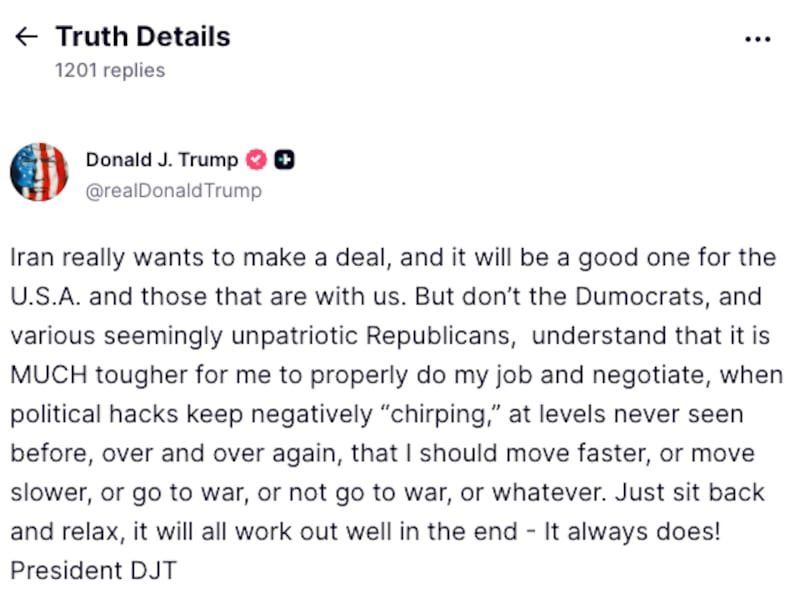
He then signed off with a call for all pundits to find a way of chilling out about the conflict. “Just sit back and relax, it will all work out well in the end,” Trump said. “It always does!”
The Daily Beast contacted the White House and the Pentagon for comment on this story.
“We do not discuss battle damage assessments for operation security reasons,” a Department of Defense spokesman said. “Our forces remain fully operational, and we continue to execute our mission with the same readiness and combat effectiveness.”
The White House did not immediately respond.